
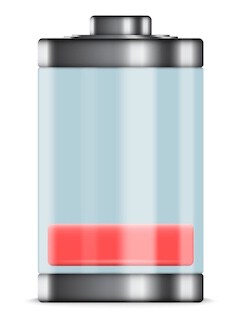
Objectivism argues for mind-body harmony. I learned the importance of this principle by overcoming several chronic health problems over the years, problems that were caused by my approach to work and overworking.
- I developed tendonitis in both forearms from typing without paying attention to pain.
- I experienced chronic fatigue from Epstein Barr and later Covid, both triggered by highly stressful events that were totally avoidable.
- I had a longstanding occasional problem with migraines and vertigo caused by overwork, which turned into a chronic problem when I turned 50. I had a migraine that never really went away for 2 months, and I couldn’t seem to beat it.
During the pandemic, when so many people were coping with chronic fatigue due to Long Covid, I started writing an article on my lessons learned. I stopped when I succumbed to Long Covid myself! I avoided being incapacitated for months because I knew a few principles for what to do based on my earlier experience.
That’s what I will share here, while drawing the lessons I learned about the cornerstone of self-development: owning my contribution to the problem.
How do you know it’s chronic fatigue vs. depression
The question I asked myself back in 2021 when I first attempted this article was, how do you know you have chronic fatigue rather than just a lack of stamina or depression that is keeping you in bed? What in hindsight were the early indicators that my fatigue was not normal tiredness or depression?
First of all, I wanted to get out of bed. If you are depressed, you don’t want to get out of bed. To counter depression, you need a therapist who can help you rekindle your love of life. Many therapists can help with depression, especially cognitive-behavioral therapists.
Second, I was actively trying to build up my stamina. Normally, if you are worn out, you can recover your stamina with a bit of rest. You can increase your stamina with exercise. If you are systematic, you see gains almost daily.
That’s not what happened. Whenever I exerted myself, I got worse. I lost stamina. It was the exact opposite of what normally happens when you’re coming back from an illness.
As I mentioned, I figured this out while I was drafting an article on this subject, about 2 weeks after having recovered from a mild bout of Covid myself. I had been struck by how “out of shape I was” from the illness and had started exercising daily to increase my stamina.
Suddenly an alarm went off in my head. I had described the exact thing that was happening to me at that moment. My attempts at exercise were backfiring. I was more pooped, not less. I had less energy, not more. That was when I realized I had Long Covid and I needed to take care of myself.
A major lesson: sometimes you need to do the induction yourself by means of experiment. Nobody had told me the early warning signs of chronic fatigue. It was my thinking and analysis that allowed me to recognize the slippery slope I was on, and intervene so early in the cycle. That’s one important cause for why I had such a mild case.
The first thing to do: “War on Relapse”
As soon as I realized I was in that fatigue cycle, I implemented a “war on relapse.” This is what I named it in 2007. I scaled down my activity to eliminate all crashes.
One reason other people don’t understand chronic fatigue is that they can see a person who claims to be suffering from it who is highly energetic at a party, or on a call, or even for a day or two. That’s because you only find out that you overdid it the next day when you crash, when you can barely get out of bed to feed the cat or yourself. This is not a joke. This exact circumstance happened to me in January 2007, and it happened to a family member a few weeks ago.
The crashes are the problem. What I did the first time is that I would rest, then when I got some energy, I would try to do something. And then I would crash the next day. With every crash, my resilience decreased and it took longer to recover energy, until I was at my nadir, having difficulty getting up to feed the cat. This is what needs to be stopped.
During my war on relapse in 2007, I paid attention to anything I did that caused me to crash the next day. Then I completely stopped doing it. This ruled out most activities. We got a 4-DVD plan with Netflix and I lolled around watching all of the Muppet Show and many movies I’d missed over the years. This I could do without crashing.
During this time, I gained permanent clarity on the energy expended by various activities. Just sitting quietly at a gathering of 8 friends for 3 hours knocked me out the next day. My empirically derived limit of socializing turned out to be 1 hour max. Going out to a restaurant knocked me down — unless we could go there, eat, and get back in less than one hour. Intellectual work was completely eliminated. I couldn’t do even 10 minutes of serious intellectual work without a crash.
For sufferers of chronic fatigue, I strongly recommend making war on relapse. I have seen other people who continued to push themselves when they got energy. So they collapsed, again and again, getting worse and worse. For years. Until they finally intervened to break the vicious cycle.
The bigger lesson: this was an exercise in taking volitional control over my emotions and my future. I wanted to work, socialize, go out and do things. Yet, I saw clearly that these activities were exacerbating the problem. So, rather than doing what I wanted at the moment, I ruthlessly eliminated them from my life, in the name of my recovery.
Then stabilize sleep
The next priority is to stabilize your sleep schedule. Even if you need 12 hours a night, make them be on a regular schedule. Every system in our bodies works better when we are on a regular schedule. You have more energy when you are on a regular schedule. You fight off illness better when you are on a regular schedule. Experts agree. The older you get, the more you need to take sleep seriously.
I’ve learned a lot about sleep over the years. There is a lot of standard advice for sleep hygiene — such as setting fixed going-to-bed times and getting-up times, going outside for sunlight in the morning, no computer screens within a couple of hours of bed, no lolling around in your bed when you’re not asleep.
A good book on sleep which I read much later is Sleep by Nick Littlehales. Also much later, I found great success in improving my sleep by systematic use of the Oura Ring.
The psychological lesson I learned is that you need to see for yourself that the advice is true.
Sticking to any kind of new routine requires mind management. When I was ill, I could stick to a schedule because I felt I was under duress. I “had to” make myself do it. But that kind of self-discipline leads to future resistance. The long-term solution is to make sleep a value.
It was only when I got the Oura ring and got help correlating my behavior with the impact on sleep and wellness that regular sleep became a deep abiding value of mine. I now get up at the same time each morning and go to sleep within a 1-hour window, more than 90% of the time, without a lot of effort. But that’s because I saw the validity of the expert advice in my own life, so the theory is now “trucklike.”
Rely on breathing exercises to raise mood and energy
I didn’t know much about breathing in 2006–2007, but I was already a practitioner of the Alexander Technique. That was my go-to energizer during that period. I also experimented with a little bit of Qigong. In hindsight, these were helpful because they help to regulate breathing.
During my bout with Long Covid, my health coach, Christopher Blakeslee, introduced me to Dr. Lemons’ 15-minute guided recording of a deep-breathing exercise. He recommended that I do the deep breathing 4 times a day. It was immediately energizing and stress reducing. These days, I play that recording as I go to sleep, and I get higher quality sleep.
Deep breathing is an amazing tool for mitigating pain and increasing energy. One day I will write a recommendation for the book Breath by James Nestor. It’s a fascinating read. Some of what he reports sounds far out, but he did a wonderful job of showing the basis in experience for what he was reporting.
The far-out parts may bother some people. I want to remind you that when it comes to the human body, only so much is understood scientifically. Data from double-blind experiments that prove cause and effect are wonderful, if they exist, and you match the population involved, and they are interpreted correctly. But they are expensive and therefore relatively rare, and much is extrapolated from them. For example, in my lifetime it was discovered that the conclusions drawn from early heart-attack studies missed some important distinctions about causes and symptoms of women’s heart attacks as opposed to men’s. And more germane to this article, for many years doctors didn’t believe chronic fatigue was a real thing.
The problem with doing experimental studies on breathing exercises as described by Nestor is that you need the subjects to learn actual skills. There’s a volitional element that makes it not a controlled experiment. And of course, there isn’t big money to pay for a double-blind experiment on breathing.
The psychological lesson I learned from experimenting with various “far-out” or just non-mainstream remedies is that often you need to experiment for yourself to judge the validity of a claim. You can’t just rely on experts, nor should you rule out something just because it’s explained in woo-woo terms, especially if there is a psychological element involved. For example, “stress” is a mental experience with physical consequences, and there are both mental and physical ways you can intervene to manage it.
When I hear about an intervention that seems harmless and for which I see some evidence that it could plausibly help me, I put in the effort to experiment with it and see for myself. I do this even if the advocates for the intervention can’t explain it or explain it in irrational terms. With empirical research, sometimes the true explanations come last.
Once you’re stable, you can start to increase stamina with exercise and diet
Once I was stable (not crashing) but on a very limited schedule, I was advised to gradually build up my stamina with controlled exercise. In 2007, I did this with swimming. At first, I could only swim 4 1/2 lengths of the pool before total exhaustion, but I did a little more every day until I could do 18 lengths (1/2 mile) with no problem. Unlike at the beginning of the illness, once I was stable, I was able to increase stamina quite easily.
In addition, when I had Long Covid, Christopher recommended a specific high-protein, low-carb diet with specific supplements and organ meat as critical to energy. That helped me recover quickly, too.
Diet and exercise is a huge subject on which I will not attempt to give specific recommendations. What I want to share is that this is a vast area where you can look for your contribution to the problem.
For example, I mentioned that when I hit menopause, I started having constant migraines and vertigo. I had had them occasionally before, but they became continuous when my hormones changed. The book Heal Your Headaches by David Buchholz explained what was going on. I followed his advice to change my diet and institute aerobic exercise and that made the difference.
To this day, I need 20 minutes of intense aerobic exercise at least a couple of times a week to keep the migraines away. If I start getting early symptoms of headache or vertigo, I know I need to hit the gym — for cycling, not strength training. Strength training, while very important to my stamina, does not keep migraines at bay at all.
The psychological lesson is partly a repeat: what you need for diet and exercise is highly individual; you likely need to figure it out by experimentation. The new point is, to stick to a diet and exercise program for the rest of your life, you often need to learn to love your diet and your exercise. That is possible, but it’s not easy. It takes a conscious unified commitment to health and happiness and a lot of mind-management tools (which of course you can start to master in the Thinking Lab Launch).
Don’t forget modern medicine!
With all of this discussion of non-mainstream treatment, I don’t want you to forget medical expertise.
The doctor who helped me the most when I had Epstein Barr was a specialist in infectious diseases. My first case of chronic fatigue was diagnosed as Epstein-Barr. My second was Long Covid. It’s very common for chronic fatigue to be related to a virus. So get an expert!
This specialist had treated AIDS patients with chronic fatigue, and he applied his learning from them to me. In addition to some of the advice above, once I was stable he prescribed Levocarnitine for me, and that had an immediate energetic benefit.
It’s not always easy to get what you need from your doctor. My primary-care doctor recommended dietary changes that would have helped some with my headaches before I read Buchholz’s book. But he didn’t explain to me why I would suddenly have a problem with them, so his advice didn’t make sense to me. Buchholz explained it, and that clarity is what I needed to upend dietary habits that I had been happy with.
The psychological lesson is: get them to explain their reasoning! You do not want to go by authority. But you may need to draw them out. They may not know what you need to have clarified. (Of course, it’s much easier now because you can research on the internet.)
Don’t forget the emotional side of the equation
Chronic fatigue is a physical problem. But you cannot ignore the emotional side of it. It is very depressing for a go-getter to be unable to do what she normally does. My therapist was helpful for that. I wrote about one tool I used to stay positive here, which is “5 Bright Spots” (you’ll find it a ways down the page). Another page on my website that might be helpful to maintain a positive outlook is on creating a rationally positive attitude.
But what my therapist was even more helpful with was processing the grief I experienced over my inability to do the things I wanted to do. An empathic listener is priceless when you are in such a vulnerable state. It is worth having professional emotional support if you have chronic fatigue.
I learned what it means to accept reality from processing my emotions when I had chronic fatigue. It means to accept the emotions about the facts, to be willing to feel the frustration and see clearly that you really can’t do that right now. And then feel the grief that ensues when you accept that.
Nobody tells you that accepting reality is often an intense, painful experience. But it settles you. It brings you serenity and strength to deal with the issues. It takes you out of a vicious cycle and into a state you can heal.
Taking ownership
I’m not a doctor. I’m not an expert. I’m just self-observant — and highly committed to my own productivity and happiness. I’ve shared my lessons learned with perhaps a dozen people over the years. They’ve found it helpful.
I hope you never need the specific advice yourself. And I hope you will send my lessons learned to anyone you know who could benefit from it. Chronic fatigue is demoralizing and dispiriting, and your moral support for them will be meaningful. It helps to know you can influence your own recovery.
The larger message is, it always pays to take ownership. To look for where you could be contributing to a problem. To find something within your locus of control. To experiment with making a difference. That was what I learned from my experiences, and I hope that is what you will take from my story.



0 Comments